Apple Reportedly Drops Face ID on First Foldable iPhone for Side Fingerprint Scanner
Apple Reportedly Drops Face ID on First Foldable iPhone for Side Fingerprint Scanner
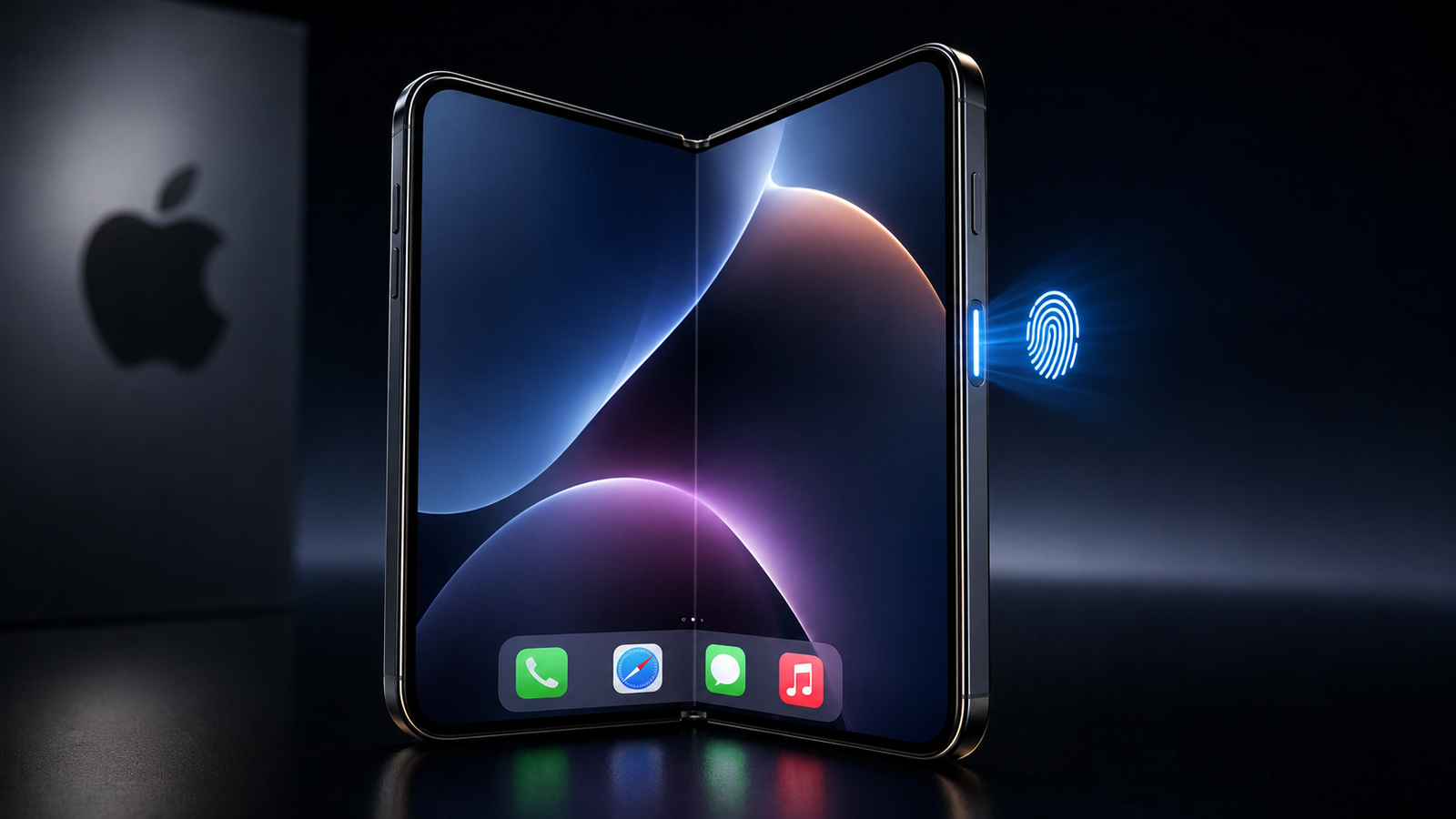
Apple’s long-rumored foldable iPhone could make a major change to biometric security by replacing Face ID with a side-mounted fingerprint sensor. Multiple reports ahead of Apple’s September 2026 event suggest the company’s first folding iPhone may use Touch ID integrated into the power button, marking a notable departure from the Face ID system used across Apple’s premium iPhone lineup.
The change has not been officially confirmed by Apple. However, reports from Mac-Rumors, 9to5Mac and analyst Ming-Chi Kuo have consistently pointed to Touch ID as the expected authentication method for the foldable model.
Why Apple May Skip Face ID
The main reason appears to be space. Apple’s foldable iPhone is rumored to be exceptionally thin, measuring roughly 4.5 millimeters when unfolded and around 9 to 9.5 millimeters when closed. Face ID relies on Apple’s True Depth camera system, which requires several components inside the device.
According to reports, fitting that hardware into such a thin foldable design would be difficult. A fingerprint reader built directly into the side or power button offers a more compact alternative while still providing biometric authentication for unlocking the phone and approving payments.
Apple already uses similar Touch ID technology in some iPad models, where the fingerprint sensor is integrated into the top button. Bringing that approach to a foldable iPhone would therefore use familiar Apple technology, even though modern flagship iPhones have relied on Face ID for years.
Expected Foldable iPhone Design
The first foldable iPhone is widely expected to use a book-style design. Current reports suggest an outer display of approximately 5.5 inches and a larger inner screen of about 7.8 inches when opened. The unfolded display could provide an experience closer to a small tablet while allowing the phone to remain compact when closed.
Apple is also reportedly working to minimize the visible crease commonly associated with foldable displays. Recent reports describe the crease as minimal rather than completely invisible, while the hinge is expected to focus on durability and a premium feel.
Camera reports suggest the device could include two rear cameras along with front-facing cameras designed for use in both folded and unfolded modes. Because Face ID hardware may be absent, Apple could use smaller camera cutouts instead of the larger sensor arrangement required by its TrueDepth system.
Possible Name and Launch
Apple has not announced an official product name. The device has frequently been called the “iPhone Fold” in reports, while some recent coverage suggests “iPhone Ultra” could be used.
Apple has confirmed a special event for September 9, 2026. Industry reports expect the company’s first foldable iPhone to appear alongside new iPhone models, although Apple has not publicly confirmed that the folding device will be unveiled at the event.
Rumors also point to a premium price, potentially above $2,000, reflecting the complicated hinge, foldable display technology and ultra-thin construction.
What Touch ID Would Mean for Users
A side-mounted fingerprint scanner could make unlocking the foldable iPhone straightforward whether the device is open or closed. It may also allow Apple to preserve more display space by avoiding larger Face ID components.
Still, users should treat these details as reported specifications until Apple officially introduces the product. Design elements, pricing, naming and hardware can change before launch.
If the reports prove accurate, the first foldable iPhone will represent more than a new screen format. The return of Touch ID on a flagship iPhone would show Apple making a practical biometric trade-off to achieve the thinness required for its most ambitious iPhone design yet without sacrificing everyday security or convenience.
The strongest current reporting says Touch ID is still expected, while Apple itself has not yet confirmed the foldable iPhone’s biometrics, final name, pricing, or launch specifications. (MacRumors)
Reader feedback
Sign in to join the discussion.