Pakistan Ready to Launch Freight Trains to Russia & Central Asian Countries
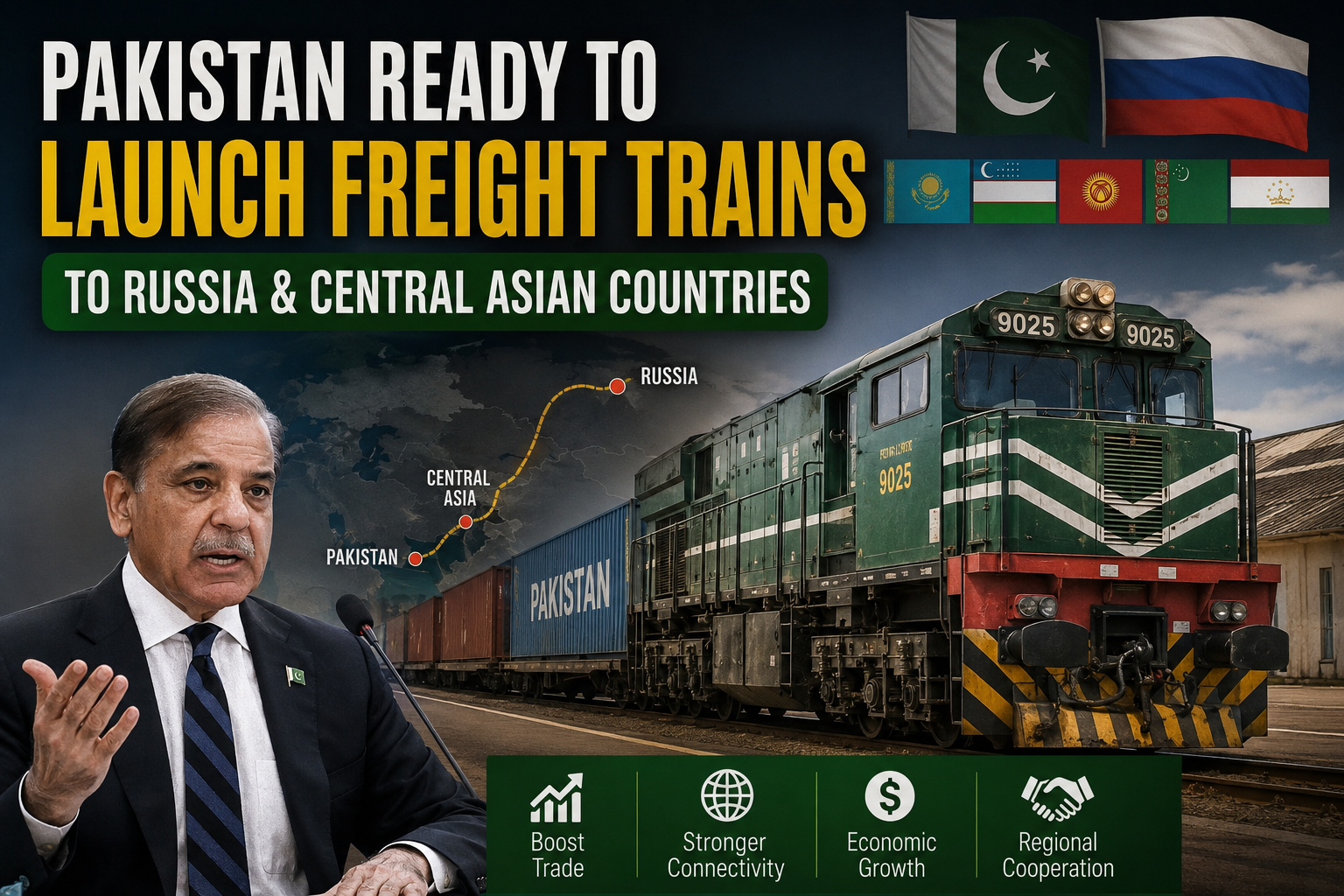
Pakistan-Russia Freight Train Plan Opens New Central Asia Trade Route
Pakistan and Russia are moving closer to launching a pilot container freight train that could strengthen trade links between Pakistan, Russia and Central Asia. The project is being developed through cooperation between Pakistan Railways and Russian Railways Logistics, known as RZD Logistics. The latest official update says both sides have agreed on a framework for international freight transportation and multimodal logistics services, with the pilot train intended to expand rail-based trade and regional connectivity.
The initiative is significant because it could give Pakistani businesses an additional overland option for moving goods to Russia and markets across Central Asia. Pakistan currently depends heavily on maritime routes for long-distance trade, while a reliable rail corridor could diversify logistics choices and improve access to inland destinations. Officials also expect the cooperation to support more efficient freight operations and help Pakistan Railways build stronger international cargo services.
However, the project has not yet entered regular commercial operation. Pakistan’s official news agency reported on August 31, 2026, that the pilot train could not begin on its earlier schedule because of regional conflict. Pakistan Railways and RZD Logistics remain committed to the plan and are continuing coordination for a launch when regional conditions allow. This distinction is important: the project is agreed and under preparation, but an exact launch date has not yet been announced.
Russia has also described the broader plan as a two-way freight link connecting Moscow with Faisalabad and Karachi. In an August 8 statement carried by the Russian Embassy in Pakistan, Ambassador Albert Khorev said the two countries were working on the first freight railway routes along the Moscow–Faisalabad and Moscow–Karachi corridors in both directions. He added that possible participation by Belarus was also being considered. According to the ambassador, implementation had been postponed several times because of geopolitical tensions in 2025 and early 2026, while the parties continued finalizing service arrangements and identifying companies interested in using the route.
The freight initiative also fits Pakistan’s wider push for stronger connections with Central Asia. Earlier in 2026, Pakistan and Kazakhstan discussed a proposed rail network linking Karachi Port with Central Asia through Afghanistan and Turkmenistan. Pakistan’s government has presented such connectivity projects as part of a broader strategy to strengthen trade, transit and regional economic integration. A successful Pakistan-Russia freight service could complement these efforts by linking Pakistani ports and industrial centers with a larger Eurasian transport network.
For exporters, the main opportunity is access to new markets and additional transport choices. Agricultural products, textiles, manufactured goods and other containerized cargo could potentially benefit if the service offers competitive pricing and reliable transit times. Importers could also gain another channel for bringing goods from Russia and other participating markets. The commercial success of the corridor, however, will depend on freight demand, customs procedures, border coordination, infrastructure compatibility and security along the route.
Pakistan Railways could benefit as well. International freight services may help the organization increase cargo revenue, improve logistics expertise and modernize operations. The agreement with RZD Logistics also includes cooperation in technical knowledge and railway freight practices, which could contribute to better efficiency and service standards over time.
The Pakistan Russia freight train therefore represents more than a symbolic transport project. If the pilot service launches successfully and attracts sustained cargo volumes, it could become an important link between South Asia, Russia and Central Asia. For now, the most accurate description is that the two sides are preparing and coordinating the pilot service, while the actual start remains dependent on regional conditions. The next major milestone will be the announcement of a confirmed launch date and the first commercial shipment.
Reader feedback
Sign in to join the discussion.