Punjab to Roll Out 1,500 Electric Buses Across 91 Tehsils From January
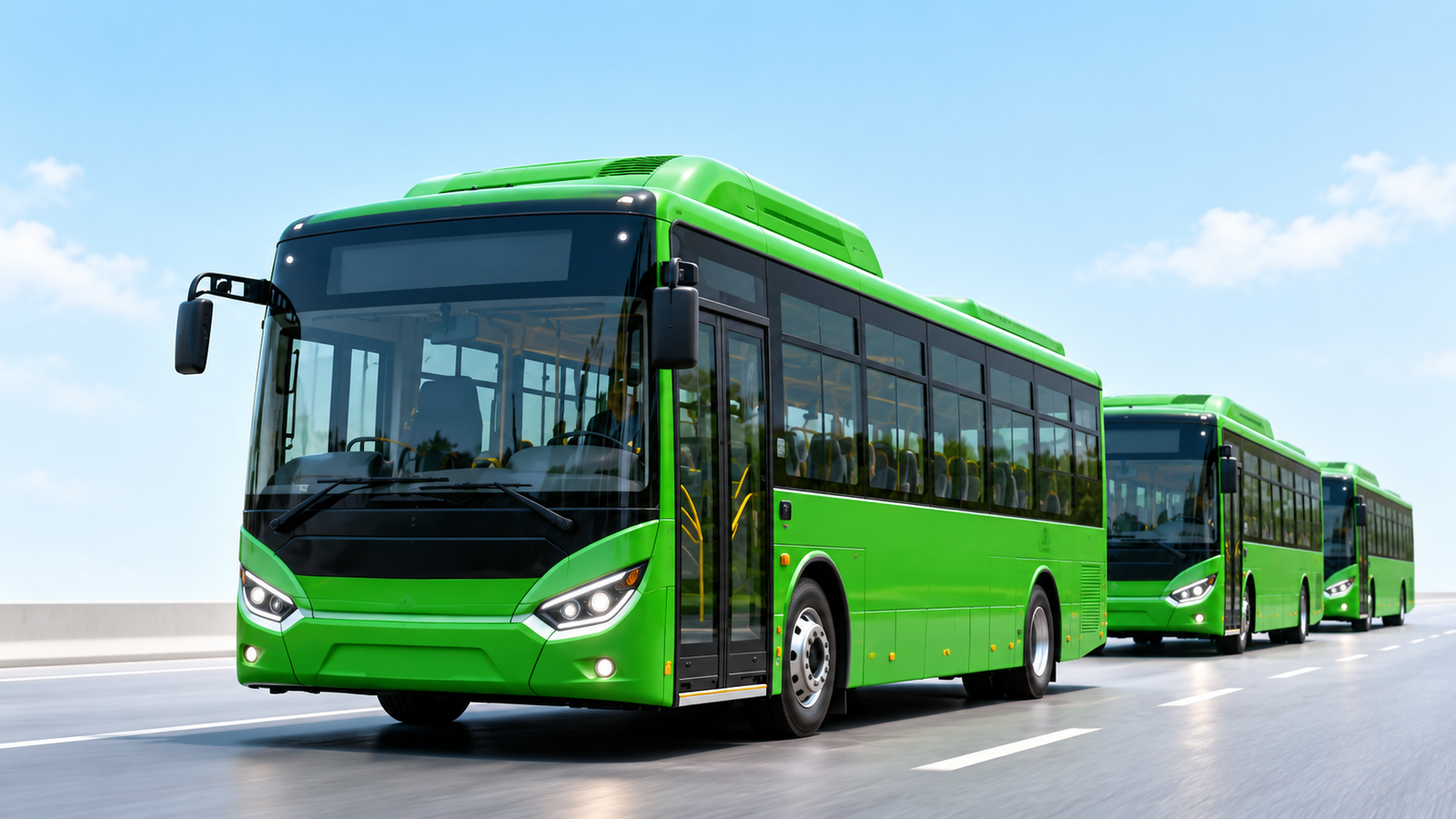
Punjab to Introduce Electric Bus Service at Tehsil Level From January
Punjab is preparing one of the biggest expansions of electric public transport in the province, with a tehsil-level rollout scheduled to begin in January 2027. Chief Minister Maryam Nawaz Sharif has approved plans to deploy 1,500 electric buses across 91 tehsils, along with dedicated depots to support charging, maintenance and daily operations. The provincial government has also set a wider target of 3,000 electric buses operating across Punjab by June 2027.
The decision was announced after a transport-sector meeting in Lahore on September 9. According to official and local media reports, the first batch for the new tehsil-level phase is expected to arrive in Lahore in January 2027 before deployment to different parts of the province. The plan is designed to take modern public transport beyond the largest cities and into smaller administrative centres where reliable urban bus networks have traditionally been limited.
The announced distribution includes 169 buses for nine tehsils in the Multan division, 87 for four tehsils in Sahiwal, 215 for 11 tehsils in Bahawalpur, 63 for 10 tehsils in Dera Ghazi Khan, and 202 for 12 tehsils in Faisalabad. Reports also list 198 buses for 14 tehsils in Sargodha, 125 for seven tehsils in Gujranwala, 122 for eight tehsils in Gujrat and 219 for 16 tehsils in Rawalpindi. Additional buses for several districts have also been approved. (Dunya News)
The expansion builds on an electric-bus programme that is already operating in parts of Punjab. Government sources list services in Lahore, Wazirabad, Muzaffargarh, Dera Ghazi Khan, Sahiwal, Sargodha and Mianwali, while recent reports say 612 electric buses are currently operational in different districts. Another 192 buses are expected to become functional in additional locations. This means January’s plan is better described as a major province-wide tehsil expansion rather than Punjab’s first ever tehsil-level electric bus service.
That distinction matters because Gujar Khan already received a tehsil-level electric bus service in February 2026. The service was launched with 14 buses on a route connecting the Gujar Khan Bus Terminal with surrounding areas. The January 2027 programme, however, is much broader in scale and is intended to extend the model across dozens of tehsils.
Punjab’s existing electric buses are designed around low-cost and accessible urban travel. The Punjab government’s e-bus portal lists a subsidised fare of Rs20 for the general public and free travel for senior citizens, students and differently-abled passengers. Buses include GPS tracking, Wi-Fi, USB charging, CCTV surveillance, anti-slip flooring and wheelchair ramps. However, authorities have not yet published a complete route map or confirmed that every fare concession and onboard feature will apply unchanged to all 91 tehsils in the January rollout.
The programme also fits into Punjab’s wider transport and environmental policy. In the 2026-27 provincial budget, the government announced major spending for mass-transit expansion, including programmes for additional electric buses and new urban bus depots. Electric buses can reduce local tailpipe emissions and noise compared with conventional diesel buses, although their overall environmental impact will also depend on electricity generation, charging infrastructure, vehicle utilization and long-term maintenance.
For residents of smaller cities and tehsils, the most important question will be implementation. The government has approved the buses and depots, but routes, schedules, exact launch dates for individual tehsils and operational details will determine how useful the service becomes in practice. If the January 2027 rollout proceeds on schedule, it could significantly expand affordable public transport access across Punjab while accelerating the province’s shift toward electric mobility.
For daily commuters, dependable frequency, safe stops, last-mile connections and consistent charging will be just as important as fleet size, particularly in tehsils where organized public transport options remain limited.
Reader feedback
Sign in to join the discussion.